
When Google rebranded Vertex AI as the Gemini Enterprise Agent Platform at Cloud Next 2026, the move looked cosmetic. It wasn’t. The rebrand collapsed six years of ML tooling, three generations of model APIs, and a new governance stack into a single surface — and the signal was clear: Google is betting that the enterprise AI race will be won not by who builds the best model, but by who governs the best fleet of agents.
- What Is the Gemini Enterprise Agent Platform?
- Architecture Deep Dive: How the Platform Fits Together
- Layer 1: The Build Layer — Agent Studio and ADK
- Layer 2: The Runtime Layer — Long-Running Agents and Memory Bank
- Layer 3: The Governance Layer — Identity, Registry, and Gateway
- Model Garden: 200+ Models Under One Governance Roof
- Agent Evaluation and Observability: The GA Stack
- CodeMender: Agentic Code Security Built Into the Platform
- The September–October 2026 Update Wave
- Pricing: What It Actually Costs
- How It Compares: Gemini Enterprise vs. the Competition
- What This Means for RPA Teams
- Getting Started: A Practitioner’s Checklist
- Frequently Asked Questions
- Is the Gemini Enterprise Agent Platform the same as Vertex AI?
- Can I use non-Google models on the platform?
- How does Agent Identity work compared to standard IAM?
- What’s the minimum cost for a small team getting started?
- Does the platform support MCP (Model Context Protocol)?
- Key Takeaways
- References
For Agentic AI Architects and RPA professionals evaluating where to build and deploy their next agent system, this platform now sits alongside Amazon Bedrock AgentCore, Microsoft’s Copilot Studio, and Anthropic’s Claude Agent SDK as a tier-one option. But its architecture, pricing model, and governance philosophy are distinct — and understanding those distinctions is the difference between a platform that fits your enterprise and one that fights it.
This guide breaks down everything practitioners need to know: the platform’s architecture and component stack, how Agent Identity and Agent Gateway actually work, the open-source Agent Development Kit (ADK) for code-first teams, the 200+ model ecosystem in Model Garden, the evaluation and observability pipeline that went GA in July 2026, the latest September–October 2026 updates including the SDK 2.0 breaking change, and a clear-eyed look at pricing, lock-in, and where this platform fits against the competition.
What Is the Gemini Enterprise Agent Platform?
The Gemini Enterprise Agent Platform is Google Cloud’s managed platform for building, scaling, governing, and optimizing AI agents in production. Announced on April 22, 2026 at Google Cloud Next, it is the direct evolution of Vertex AI — Google’s ML platform that launched in May 2021 and unified AutoML with the legacy AI Platform.
But “evolution” undersells what changed. Where Vertex AI was fundamentally a model training and deployment platform with agentic capabilities bolted on through Agent Builder and Agent Engine, the Gemini Enterprise Agent Platform was re-architected around four pillars that treat agents — not models — as the primary unit of production work:
| Pillar | What It Covers | Key Components |
|---|---|---|
| Build | Agent creation for every skill level | Agent Studio (low-code), Agent Development Kit (code-first), AI-native coding tools |
| Scale | Production runtime for long-lived agents | Agent Runtime (re-engineered), Memory Bank (persistent context), Sessions |
| Govern | Enterprise control plane for agent fleets | Agent Identity, Agent Registry, Agent Gateway, Semantic Governance Policies |
| Optimize | Continuous improvement pipeline | Agent Simulation, Agent Evaluation (GA), Agent Observability, App Topology API |
As Michael Gerstenhaber, Google’s VP of Product Management for Cloud AI, framed it: the platform provides “a single destination for your technical teams to build agents” — a claim that only holds up if the governance and observability layers are as strong as the build tools. As we’ll see, Google’s bet is that they are.
Architecture Deep Dive: How the Platform Fits Together
The platform operates across three layers that correspond to three different roles in an enterprise agentic AI deployment: builders, operators, and business users.
Layer 1: The Build Layer — Agent Studio and ADK
Agent Studio is the visual, low-code interface for building agents. It’s designed for citizen developers and business analysts who need to wire up agent logic without writing code — analogous to Microsoft’s Power Automate or UiPath’s StudioX. You define triggers, connect to data sources, set guardrails, and deploy, all from a browser-based canvas.
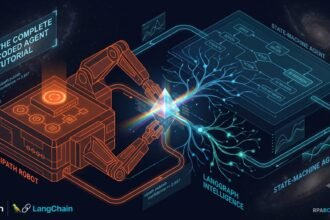

The Agent Development Kit (ADK) is the code-first counterpart. Open-sourced and now available for both Python and Java (the Java 1.0 release shipped in April 2026), ADK provides software-engineering-oriented abstractions for orchestration, tools, evaluation, and deployment. Thoughtworks moved it from Assess to Trial on their Technology Radar in April 2026, noting its “stronger observability and runtime features” and recommending it for teams already invested in Google Cloud.
What makes ADK architecturally interesting for RPA professionals is its multi-agent orchestration model:
- Hierarchical composition: Specialized sub-agents compose into parent agents. A document-processing agent can delegate extraction to one sub-agent, validation to another, and exception handling to a third.
- Workflow patterns: Sequential, parallel, and loop agents handle deterministic orchestration — the kind of structured handoff that RPA architects already think in. Custom configurations allow hybrid approaches.
- A2A protocol support: Native support for Google’s Agent-to-Agent (A2A) protocol means ADK agents can discover and collaborate with agents built in other frameworks or languages. The Java SDK ships with
RemoteA2AAgentand theA2A AgentExecutorspecifically for cross-framework interop. - Tool ecosystem: Pre-built tools include
GoogleMapsTool,UrlContextTool(web content grounding),ContainerCodeExecutorandVertexAiCodeExecutor(sandboxed code execution), andComputerUseToolfor browser and desktop automation — directly relevant to RPA use cases. - Human-in-the-loop:
ToolConfirmationpauses execution until a human approves, critical for regulated workflows in financial services, healthcare, and government.
ADK is model-agnostic despite being Google’s framework. Agents can use Gemini, OpenAI models, or Anthropic’s Claude, and deploy to any cloud provider. This is a deliberate design choice: Google wants ADK adoption even from teams that run some workloads elsewhere.
Layer 2: The Runtime Layer — Long-Running Agents and Memory Bank
Google re-engineered the Agent Runtime specifically for long-running agents — agents that maintain state for days or weeks rather than completing within a single session. This is a critical capability gap that many competing platforms are still addressing. For process automation, the implications are significant: a procurement agent can track an approval chain across days, a compliance agent can monitor regulatory filings over weeks, and a customer-success agent can manage a multi-touch onboarding sequence over months.
Memory Bank provides the persistent, long-term context layer. It stores agent state, conversation history, and accumulated context at $0.30 per GiB-month. This is separate from the model’s context window — it’s a managed persistence layer that the agent can read from and write to across sessions. Memory Bank billing started September 1, 2026.
Event Compaction (available in ADK) manages history size through sliding windows and summarization, reducing latency and inference cost in long-running sessions. This is the kind of engineering detail that matters in production: without compaction, a month-long agent session’s context would balloon past any model’s window and any reasonable token budget.
Layer 3: The Governance Layer — Identity, Registry, and Gateway
This is where Google’s platform differentiates itself most aggressively. As Bain & Company’s analysis noted, the Cloud Next 2026 announcements marked a shift from “agent creation” toward agent governance — the control plane for running an “agentic workforce” in production.
Agent Identity gives every agent — including third-party and partner-sourced agents — a verifiable cryptographic identity. This creates an auditable record of every agent action tied to access policies. For enterprises worried about shadow AI (unauthorized agents accessing internal systems), Agent Identity is the enforcement mechanism: if an agent doesn’t have an identity, it doesn’t get through the Gateway.
Agent Registry catalogs approved agents, their capabilities, tools, and permissions. Think of it as a governed directory — similar to how an API gateway maintains a catalog of approved services. The App Topology API, which went GA on September 30, 2026, adds a query builder and simplified single-agent topology view to visualize how agents relate to each other and to backend systems.
Agent Gateway routes and inspects all agent traffic. It enforces consistent security rules, handles agentic traffic across clouds, and integrates with Model Armor (Google’s guardrails service). As of September 30, 2026, Cloud Trace integration with Agent Gateway entered Preview, enabling end-to-end request tracing across agents, the Gateway, Google Cloud services, tools, and MCP servers. Agent Gateway billing began July 13, 2026.
Semantic Governance Policies add content-level controls. As of September 29, 2026, policies can show custom denial messages (up to 1,000 characters) when an agent request is denied — critical for user experience in customer-facing agent deployments. And as of September 25, 2026, the policy engine supports VPC Service Controls (Preview), letting enterprises place the entire governance layer inside a service perimeter — a level of security integration that parallels what SAP’s AI Agent Hub aims to provide within the SAP ecosystem.
Model Garden: 200+ Models Under One Governance Roof
Model Garden is the multi-model marketplace at the heart of the platform. With over 200 enterprise-ready models, it includes:
| Provider | Notable Models (as of October 2026) | Status |
|---|---|---|
| Gemini 3.1 Pro, Gemini 3.8 Flash, Gemini 3.8 Live, Gemini Nano Banana 2.1, Gemma 4 | GA / Preview varies | |
| Anthropic | Claude Opus 5.5, Claude Sonnet 5.5, Claude Haiku 5.5 | Available in Garden |
| xAI | Grok 4.6 (GA), Grok 4.7 (Preview) | GA / Preview |
| Meta | Muse Spark 1.3 (reasoning model for agentic workflows) | Preview |
| Google (media) | Imagen, Veo, Lyria 3 | Various |
| Open source | Llama, Gemma variants | Various |
The strategic value here isn’t just model choice — it’s standardized governance across models from different providers. An enterprise can route some workloads to Gemini 3.8 Flash (fast, cheap, good for high-volume agent tasks), others to Claude Opus 5.5 (complex reasoning), and others to Grok 4.7 (real-time data synthesis) — all under the same Agent Identity, Gateway, and policy infrastructure. This is the multi-model governance proposition that platforms like Amazon Bedrock AgentCore also target, but with different trade-offs (more on this in the comparison section).
Gemini 3.8 Live, which went GA on September 24, 2026 with voice, reliability, and orchestration improvements, is particularly relevant for voice-based agent deployments — the next frontier for enterprises that currently run IVR and contact center automation through UiPath, Automation Anywhere, or NICE CXone.
Agent Evaluation and Observability: The GA Stack
One of the platform’s most significant 2026 milestones was the GA launch of Agent and Model Evaluations on July 31, 2026. This isn’t a dashboard — it’s a full evaluation engine with 20+ pre-built metrics, adaptive rubrics co-developed with Google DeepMind, and continuous production monitoring.
How Agent Evaluation Works
The system is built around Experiments — the primary unit of evaluation. Each experiment combines an eval dataset with metrics and produces drill-down results from summary scores to individual failure traces:
- Computation-based metrics: Deterministic measures against reference outputs — ROUGE for summarization, BLEU/MetricX/COMET for translation, exact match for extractive QA.
- Adaptive rubrics (LLM-as-a-judge): An automated workflow generates case-specific pass/fail rubrics from the eval case, developer instructions, and tool declarations. The judge gives a verdict and rationale for each rubric. Natural-language guidelines can steer rubric generation — so a healthcare compliance team can add domain-specific evaluation criteria.
- Pre-built agent metrics: Task Success, Tool Use Quality (tool selection, arguments, schema compliance), Safety (content policy violations, PII detection), Trajectory Quality, Final Response Quality, Hallucination, and Grounding.
- Custom metrics: Python code-based or LLM-as-a-judge with your own criteria, rating scale, and judge model. Local runs can use any provider’s model; server-side runs support any Model Garden model.
Simulation and Online Monitoring
The Case Generator creates synthetic evaluation cases from the agent’s instructions and tools — useful for cold-start testing when real production data isn’t yet available. The User Simulator (for ADK agents) plays a persona through a multi-turn conversation based on a defined plan. The Environment Simulator intercepts tool calls during evaluation and returns mocked data, forced errors, or added latency, without touching production — essential for testing edge cases and failure modes that are hard to reproduce with real systems.
Online Monitors grade live production traffic continuously, with sampling and filters to control cost. Score-over-time dashboards surface drift, and alerts go to email, Slack, or other channels. The same metrics run unchanged in offline experiments and online monitors, so scores stay comparable across development and production — a design decision that prevents the common problem of evaluation metrics diverging from production reality.
Issue Clustering
The platform groups evaluation failures into clusters against a taxonomy of failure reasons. This is where evaluation becomes operationally useful: instead of reviewing hundreds of individual failures, teams see patterns — “the agent consistently selects the wrong tool when the user query contains geographic context” — that point directly to the root cause.
CodeMender: Agentic Code Security Built Into the Platform
CodeMender is Google’s agentic code security tool integrated into the platform. It’s been updated aggressively through September–October 2026 (versions 0.7.0 through 0.13.0 shipped in rapid succession) and deserves specific attention from RPA teams that are building agents with code execution capabilities.
What CodeMender does: it scans agent code for security vulnerabilities, generates fixes, and validates those fixes — agentic security for agentic systems. Key capabilities as of version 0.13.0 (October 7, 2026):
- Multi-language scanning: Python, JavaScript, TypeScript, Go, C#, Rust, Kotlin, Ruby, and PHP (C# and Rust added in v0.9.0).
- PR integration:
--diffand--stagedscanning for pull request reviews, plus SARIF v2.1.0 export and--fail-onCI gating (v0.10.0). - Deep hybrid scanning: Combines static analysis with LLM-powered reasoning about vulnerability context (v0.10.0).
- Scope-restricted fixes:
cm fixblocks edits to CI/CD, build, and repo config files outside the vulnerability’s scope (v0.12.0) — preventing the “fix that breaks the build” failure mode. - Interactive HTML reports: with drill-down from summary to individual finding (v0.9.0).
- Gemini 3.8 Flash as default model: fast, cost-effective for high-volume scanning (v0.8.0).
For RPA teams building agents that generate or execute code (increasingly common as UiPath, Automation Anywhere, and Power Automate add AI-generated automation capabilities), CodeMender fills the security gap between “the agent wrote code” and “the code is safe to run in production.”
The September–October 2026 Update Wave
The platform’s release cadence has been aggressive. Here are the most significant updates from the last month:
| Date | Update | Impact |
|---|---|---|
| Oct 7 | Claude Haiku 5.5 added to Model Garden | Fast, cost-effective Anthropic model for high-volume agent tasks |
| Oct 6 | Gemini Nano Banana 2.1 (GA) | On-device image generation for edge agent deployments |
| Sep 30 | App Topology API (GA) | Production-ready agent relationship visualization and querying |
| Sep 30 | Cloud Trace + Agent Gateway (Preview) | End-to-end tracing across agents, Gateway, tools, and MCP servers |
| Sep 29 | Custom denial messages for governance policies | Better UX when agents are blocked by enterprise policies |
| Sep 25 | Governance + VPC Service Controls (Preview) | Enterprise security perimeter around the entire policy engine |
| Sep 24 | Gemini 3.8 Live (GA) | Production-ready voice agents with orchestration improvements |
| Sep 24 | Muse Spark 1.3 from Meta (Preview) | Reasoning model with MCP tool calling and 1M-token context |
| Sep 18 | Agent Platform SDK for Python 2.0.1 (Breaking) | Major restructure: gen-AI modules move to Gen AI SDK, agent surface separated |
The SDK 2.0.1 breaking change (September 18) deserves special attention. Google moved all generative AI modules to the Google Gen AI SDK and separated the agent surface into its own package with restructured namespaces. A migration guide is available, but teams with existing Vertex AI / Agent Builder deployments need to plan this upgrade carefully — it’s not a drop-in update.
Pricing: What It Actually Costs
Google’s pricing for the Gemini Enterprise Agent Platform combines seat-based licensing with usage-based charges, making cost forecasting more complex than pure-consumption platforms like AWS Bedrock AgentCore.
| Component | Cost |
|---|---|
| Gemini Enterprise Business seat | From $21/seat/month |
| Standard and Plus tiers | From $30/seat/month |
| Agent Runtime compute | $0.0864/vCPU-hour + $0.0090/GiB-hour |
| Web grounding | $45 per 1,000 grounded prompts |
| Data grounding (your own data) | $2.50 per 1,000 requests |
| Memory Bank storage | $0.30/GiB-month |
| Model inference | Per-token, varies by model |
Key billing dates to know: Agent Gateway billing began July 13, 2026. Memory Bank and Sessions billing started September 1, 2026. Pricing is still evolving — Google has changed billing tiers multiple times in 2026, so any cost model needs regular verification against the live pricing page.
For comparison: a workload running 2 vCPU / 4 GB RAM for 200 active hours costs approximately $41.76 on Google’s Agent Runtime versus approximately $43.42 on AWS Bedrock AgentCore Runtime. But Runtime compute is typically a small fraction of total cost — the seats, grounding, memory, and inference tokens dominate the bill.
How It Compares: Gemini Enterprise vs. the Competition
For Agentic AI Architects evaluating platforms, here’s how Google’s offering stacks up against the three main alternatives:
| Dimension | Gemini Enterprise Agent Platform | Amazon Bedrock AgentCore | Microsoft Copilot Studio + Azure AI Foundry | Anthropic Claude Agent SDK |
|---|---|---|---|---|
| Pricing model | Seat + usage | Pure consumption (12 components) | Copilot Credits + seat | API usage (per-token) |
| Governance | Built-in (Identity, Registry, Gateway) | Composed by buyer from IAM + GuardRails | Built-in via Entra ID + Purview | API-level guardrails |
| Multi-model | 200+ models (Model Garden) | Multiple via Bedrock model access | Azure OpenAI + some third-party | Claude models only |
| Agent interop | A2A protocol (native) | Bedrock-internal routing | Agent Node in workflows | MCP (native) |
| Low-code option | Agent Studio | Step Functions + Bedrock console | Copilot Studio (visual builder) | None (code-first) |
| RPA integration | Via MCP / A2A + partner agents | Via Lambda / Step Functions | Power Automate + Copilot Studio | Via MCP servers |
| Lock-in | GCP control plane, models portable | AWS-native, models swappable within Bedrock | Microsoft 365 ecosystem | Model-locked, deploy-agnostic |
Use Gemini Enterprise when: Your organization is already in the Google Cloud ecosystem, you need multi-model governance under one control plane, voice agent capabilities (Gemini 3.8 Live) are a priority, or you want the A2A protocol’s cross-framework agent interoperability.
Use Bedrock AgentCore when: You’re AWS-native, prefer pure consumption pricing without per-seat fees, and want granular control over composing your own governance stack from AWS primitives.
Use Copilot Studio when: Your organization runs on Microsoft 365 and Power Platform, your citizen developers already build Power Automate flows, and you want agents that integrate directly with Teams, SharePoint, and Dynamics 365.
Use Claude Agent SDK when: You’re building code-first agent systems, need the strongest reasoning model for complex multi-step tasks, and can compose your own governance layer.
What This Means for RPA Teams
The Gemini Enterprise Agent Platform matters to RPA professionals for three specific reasons:
1. The governance stack solves the “shadow agent” problem. As enterprises move from dozens of RPA bots to hundreds of AI agents, the governance gap widens — the same challenge explored in enterprise agent governance comparisons between IBM watsonx and ServiceNow. Agent Identity, Registry, and Gateway provide the same kind of centralized control that RPA platforms like UiPath Orchestrator provide for bots — but for agents of any type, from any framework. If your organization is struggling with agent sprawl (agents deployed by different teams, with different security postures, accessing different systems), this is the governance layer you’d otherwise have to build yourself.
2. The A2A protocol enables hybrid RPA + agent architectures. The A2A protocol, which Google co-created and donated to the Agentic AI Foundation alongside Anthropic’s MCP, lets ADK-built agents communicate with agents built in any framework. For enterprises running UiPath or Automation Anywhere alongside new AI agent systems (the kind of hybrid architecture explored in IBM watsonx Orchestrate’s agentic control plane approach), A2A provides the interop layer — your RPA bots and AI agents can coordinate without custom integration code.
3. Voice agents via Gemini 3.8 Live are production-ready. The GA of Gemini 3.8 Live (September 24, 2026) with orchestration improvements opens a new front for RPA teams: contact center automation, IVR replacement, and voice-based process initiation. Teams currently running voice workflows through NICE CXone, Genesys, or Pega Voice AI — or evaluating Microsoft’s Copilot Autopilot persistent agent model — now have a Google-native alternative that integrates directly with the same agent governance stack.
Getting Started: A Practitioner’s Checklist
If you’re evaluating or adopting the Gemini Enterprise Agent Platform, here’s the path that minimizes friction:
- Start with the ADK, not Agent Studio. The ADK gives you code-level control and portability. Agent Studio is useful for citizen-developer use cases, but production agentic AI systems need the flexibility of code-first development.
- Set up Agent Identity and Registry before deploying your first agent. Retrofitting governance is always harder than building it in. Define your identity policies, approved tool catalogs, and access controls upfront.
- Use the evaluation stack from day one. Create your first eval dataset alongside your first agent. The adaptive rubrics make it possible to start evaluating even before you have production data — the case generator and user simulator provide synthetic test coverage.
- Plan for the SDK 2.0 migration. If you have existing Vertex AI / Agent Builder code, the September 18 SDK restructure is a real migration project. Read the migration guide, plan your namespace changes, and test thoroughly before deploying.
- Budget with usage monitoring, not estimates. The seat-plus-usage pricing model makes cost prediction harder than pure-consumption alternatives. Set up billing alerts early, and monitor grounding and inference costs closely — they’re typically the largest variable.
Frequently Asked Questions
Is the Gemini Enterprise Agent Platform the same as Vertex AI?
It’s the evolution of Vertex AI, not a separate product. All Vertex AI capabilities (training, tuning, Model Garden, pipelines) are now part of the Gemini Enterprise Agent Platform, with new agentic capabilities (Agent Identity, Registry, Gateway, evaluation) layered on top. Existing Vertex AI projects continue to work, but the SDK namespace restructure in version 2.0.1 requires code changes.
Can I use non-Google models on the platform?
Yes. Model Garden includes 200+ models from Anthropic (Claude), xAI (Grok), Meta (Muse Spark), and open-source providers (Llama, Gemma). The ADK itself is model-agnostic — agents can use any model and deploy to any cloud.
How does Agent Identity work compared to standard IAM?
Agent Identity gives each agent a verifiable cryptographic identity, separate from the human or service account that deployed it. This identity is tied to the agent’s access policies, creating an audit trail of agent-specific actions. Standard IAM manages who can deploy and manage agents; Agent Identity manages what the agents themselves can do.
What’s the minimum cost for a small team getting started?
The Business edition starts at $21/seat/month, plus per-token inference costs that vary by model. A small team (5 seats) running moderate workloads on Gemini 3.8 Flash (the most cost-efficient option) can expect a baseline of roughly $105/month in seats plus $50–200/month in usage, depending on volume. Free-tier credits ($300 for 90 days) offset initial experimentation costs.
Does the platform support MCP (Model Context Protocol)?
Yes. The Agent Gateway’s Cloud Trace integration (Preview, September 30, 2026) specifically mentions end-to-end tracing across MCP servers. The A2A protocol provides agent-to-agent communication, while MCP handles agent-to-tool communication — the platform supports both.
Key Takeaways
- The Gemini Enterprise Agent Platform is Google Cloud’s full-stack agentic AI platform, evolving Vertex AI from an ML platform into an agent governance platform with Identity, Registry, and Gateway controls.
- The open-source Agent Development Kit (ADK) supports Python and Java, is model-agnostic, and natively supports the A2A protocol for cross-framework agent interoperability.
- Agent and Model Evaluations went GA in July 2026 with 20+ metrics, adaptive rubrics co-developed with DeepMind, and continuous production monitoring.
- Model Garden provides 200+ models from Google, Anthropic, xAI, Meta, and open-source providers under one governance layer.
- The governance stack (Agent Identity, Registry, Gateway, Semantic Governance Policies) addresses the “shadow agent” problem that enterprises face as agent deployments scale.
- Pricing combines per-seat licensing ($21+/seat/month) with usage-based charges — more complex to forecast than pure-consumption platforms, but with slightly lower compute costs ($0.0864 vs. $0.0895/vCPU-hour vs. AgentCore).
- The September 18 SDK 2.0.1 breaking change is a real migration for existing Vertex AI users — plan accordingly.
- CodeMender provides agentic code security (multi-language scanning, PR-integrated, CI-gating) built directly into the platform.
References
- Google Cloud, “Google Unveils Gemini Enterprise Agent Platform, Expands Vertex AI into Full Agent Stack” — AIwire / HPCWire, April 23, 2026.
- Google Developers Blog, “Agent and Model Evaluations in Gemini Enterprise Agent Platform Are Now GA”, July 31, 2026.
- Google Cloud, Gemini Enterprise Agent Platform Release Notes, September–October 2026.
- Bain & Company, “Google Cloud Next 2026: The Agentic Enterprise Control Plane Comes Into View”, April 27, 2026.
- Thoughtworks Technology Radar, “Agent Development Kit (ADK)” — Trial, April 2026.
- i-Programmer, “Google Agent Development Kit For Java 1.0 Released”, April 16, 2026.
- Channel Insider, “Google Cloud Makes Key Agentic AI Announcements at Next ’26”, April 2026.
- eCorpIT / Dev.to, “3 Enterprise AI Agent Platforms Compared: AgentCore, Gemini Enterprise, Presence (2026)”, 2026.
- Wikipedia, “Gemini Enterprise Agent Platform” — accessed October 8, 2026.